Wednesday, 1 June 2016

The Dissolution of the Monasteries | Life in the Past Festival

The dissolution of the monasteries was a major event lasting many years which changed the landscape of British religion forever. The many abbeys and priories of the country were wiped out leaving but ruins of what once was. The lives of monks and nuns were changed in an instant and many abbots and priors lost their lives. A massive change for England brought on by the greed of a king.

Henry VIII became king in 1509 and at this point corruption had become a major issue within religious houses across Europe, and was being attacked from many angles by critics and protestant reformers alike. It seemed that a reformation was fast approaching. Henry was Catholic and was a defender of the Pope in Rome at the start of his reign but as time went on, and the need for a divorce became pressing, Henry started to break away from Rome and the Pope.

In 1534 the Act of Supremacy was passed making Henry the head of the English Church. Up to this point Henry had been excessive with his wars, which were extremely costly. This had used up all of his fathers inheritance so money had become a pressing concern.

It was in 1535 that King Henry VIII commissioned a survey of ‘his’ Church and its wealth, a survey called the Valor Ecclesiasticus (Church Valuation). This was the first time that the net wealth of monasteries had been assessed and here in Furness the Abbey of St Mary was found to have an annual income of £805, making it the second richest of the Cistercian houses in England. In total the religious sites of the country controlled around four million acres, about 16 per cent, of the productive land in England and 12 per cent of the total land area, this equated to a huge amount of wealth.

In 1536 Thomas Cromwell put forward an act of reform, known as the Suppression or Dissolution Act, for the smaller monastic houses earning under £200 a year. Cromwell had declared these houses were “sunk irredeemably in iniquity” and that they had “resisted all attempts at reform for 200 years or more”. He came to the conclusion that they should be shut down and the “idle and dissolute monks and nuns” be distributed amongst the larger, greater abbeys where they could become more disciplined and “mend their ways”. The properties and any riches they held could then be transferred to the King, who, according to the Act, would convert the endowments to better uses. Something that never happened, in fact most of the money went into the government funds.

As one would expect there was a considerable amount of hostility building towards the government, especially here in the north. This led to a rebellion in October 1536 known as the Pilgrimage of Grace. York and Lincoln were seized by rebels for a short time as a protest against the dissolution and various other grievances. The restoration of the suppressed abbeys was one of the highest demands of the rebels.

This uprising didn’t last long, the king waited as the rebels fell out amongst themselves before he crushed them without mercy. A close friend to the king, Robert Radcliffe, was despatched to Lancashire to quell the rebellion and his arrival was marked by a series of executions. Several large abbeys who had been helping the rebellion were now at great danger, one of these being Furness Abbey. Radcliffe suggested to the abbot of Furness at the time, Roger Pyle, that he should surrender the abbey as a ‘voluntary discharge of conscience’ or suffer the consequences and be executed. The abbot took the advise and in April 1537, along with 28 monks and the prior (the abbot’s deputy), signed the deed of surrender. This passed the abbey, its wealth and its lands to the crown. It wasn’t long before Thomas Cromwell’s men arrived to dissolve the monastery…


Tuesday, 3 May 2016

The Timetable of a Monk | Life in the Past Festival

The lot of a medieval monk living in one of the many abbeys across Britain was not an easy one. Men did not become monks for an easy life, they became monks to worship the lord with their work, prayer and devotion. They often perceived themselves as soldiers engaged in a spiritual war against their imperfect, fallen nature. This made for a hard life with each day was a long one, packed full of worship and work.


What follows is the basic timetable for a Cistercian choir monk living in a medieval abbey during the summer months:


2.00am –         A choir monks day would start early with the first of 8 services, Matins. The monks would gather in the church and stand in the choir stalls. Here they would celebrate the night office with singing. Two monks, the precentor and succentor, lead the singing and keep their eyes on the other monks to make sure no one nods off.

2.45am –         Matins ends and the monks can rest in the cloister for a time. Sadly they aren’t allowed back to bed.

3.00am –         Monks return to church for Lauds, the second service of the day. This one is to celebrated daybreak.

3.15am –         Lauds ends and the monks can return to the cloister to read for 45 minutes.

4.00am –         At sunrise it’s time for Prime to mark the first hour of the day. Another short service lasting only 15 minutes.

4.15am –         It is now time for the chapter meeting. Monks would meet in the chapter house daily. They would sit on benches around the walls while they watch and listen to the Abbot as he says a prayer and reads a chapter of the Rule of St Benedict.

Following this all the monks must confess there faults and sins. They would then be punished accordingly often having to lie flat on the ground in front of the others, a practice known as prostration. In some cases some may have to fladulate, in other words whip, themselves.

Announcements follow this and the meeting ends with Psalm 129 and prayers before tasks are given out to all the monks.

4.45am –         The monks leave the chapter house to go about their daily tasks for around 2 and a half hours

7.30am –         Time for the monks to return to the cloister for half an hour of reading.

8.00am –         Terce, the third service of the day. The monks return to the church to take up position in the choir stalls. Mass is this time spoken for the monks to listen too and once a week wine and bread are taken to symbolize the body and blood of Christ.

9.00am –         Monks return to the cloister for further reading although priests stay in church for private mass.

11.00 am –      Church again for the forth service of the day, Sext. The name sext comes from latin for six and it is so called because it was originally celebrated on the sixth hour of the day.

11.30am –       Time for dinner. All the monks gather in the refectory, or frater, where the main meal of the day is served. They stand for blessings before sitting down to eat. Beans covered in vegetable juice is often popular at this time and each monk has a serving of bread for the day, their daily bread. Over the course of the meal a monk stands in a large pulpit and reads from scripture.

12.00pm –       Following dinner the monks join the procession of thanksgiving in the church before being allowed to take a nap in the dormitories or read.

2.00pm  -        Now comes the time for None which involves more singing in the church.

2.30pm –         Following None the monks return to their work, be that in the kitchen, out in the herb gardens or working the land with the lay brother. This last for around 3 and a half hours.

6.00pm –         A return to church for Vespers, the seventh service of the day.

6.30pm -         During the summer months monks are allowed two meals a day and now is the time for the second, although it isn’t as big as the first. They are given vegetables and fruit to eat with whatever is left of their daily bread.

7.15pm –         The collation reading. Monks gather in the north cloister walk and listen to a reading by the reader of the week.

7.30pm –         Back to church for Compline, the last service of the day. At the end of this services the abbot sprinkles the monks with Holy Water.

8.00pm –         Bed time. After a long and tiring day of work, reading and singing the monks are allowed to return to bed for six hours of sleep.  Then it’s time for Vigils again and the start of another day.


As you can see there is a lot for a monk to fit into his day and it certainly isn’t an easy life for them. The days were long with out much rest, meals were scarce and not the most delicious. Nearly every day was spent in the same way never leaving the precinct wall of their monastery. Is it a life you would want to lead?


Tuesday, 23 February 2016

Life in the Past | Living History Festival | Announcement


Hi there!

We at Iron Shepherds are very pleased to announce a brand new living history festival based in Furness called Life in The Past!

We have been busy creating this festival which will run from May through to August 2016. It will consist of a variety of events at various loctions covering different periods of Furness history from the 13th Century to the 1920s.

Alongside our events there will be a selection of talks by archeologists and a host of online materials. We will also be running a couple of competitions for you to get involved in!

We will be releasing more info soon alongside a brand new website at - http://lifeinthepast.co.uk In the mean time keep an eye out at the Life in the Past Facebook page - https://www.facebook.com/LifeinthePast/

We can't wait to share more with you very soon!!

Wednesday, 30 December 2015

Making History Come to Life | VIDEO

We recently completed a short video promoting ourselves which has been put together with various shots taken throughout 2015. It gives a little taste of what we do and hopefully soon we will have more videos delving a little deeper into what we about.

In the meantime enjoy the video here:

Saturday, 19 December 2015

How to have a Medieval Christmas

Christmas today is a time for giving, a time for sharing precious moments with our loved ones and a time for celebration. Back in Medieval times it was a little different, but not much!

The term 'Christmas' came about in England during the 11th century and was an amalgamation of an Old English expression for the Festival of Christ - 'Christes Maesse'.

Christmas at this time followed much older traditions and celebrations which predominantly celebrated the thought of longer days and the warmer, better weather of Spring approaching. They also were a time to think back and celebrate the past year while there was less agricultural work to be done and thus more time. Time for parties!

Festivals like the Scandinavian Yule and Roman Saturnalia had perviously been celebrated at this time of year and are where Christians borrowed the date for Christmas from.


The exact date for the birth of Jesus was never mentioned in the Bible so the Church used the dates of Pagan festivals as the time for their new celebration of Christ. This made sense as everyone was already celebrating at this time but it also could help Christianise the pagan winter festivals. Something desired at the time. The practice of gift giving at Christmas was even banned for a time by the Catholic Church as it was suspected it had pagan origins! Luckily this ban didn't last.

Christmas soon became a time for feasting, drinking, gift giving, singing, dancing and indulging. Similar to today!

So, if you want to inject a bit of Medieval Christmas into your modern celebrations here are a few suggestions that might help:

1. Get Rid of the Tree

People didn't bring trees inside to decorate their homes back then, although trees were important symbols. The Church would decorate outdoor trees with apples on Christmas Eve, a day known as 'Adam and Eve Day' at the time. Seasonal plant foliage was often used as inside decoration; holly, ivy and mistletoe were the most commonly used.

2. Don't Sing Carols in Church

Singing carols is a large part of Christmas in todays society but in Medieval England carols were banned in churches. Many took the word 'carol' too literally it meaning 'to sing and dance in a circle'. This kind of behaviour would ruin Christmas masses so the Church ruled to send carol singers outside the church walls.

3. Eat Rectangular Mince Pies

Mince pies were baked in a rectangular case in Medieval times to symbolise the crib which the baby Jesus lay in. Certain ingredients like nutmeg, cinnamon and cloves were meant to represent the gifts given by the three wise men. Originally these pies actually did include shredded meat alongside fruit and spices. It was also believed to be lucky to eat one a day over the 12 days of Christmas. You can find our more about Mince Pies in a great English Heritage article here. It even has a 1591 recipe for you to try.

4. Call it Xmas

Xmas is not a modern abbreviation, it in fact originates from Medieval times. The X stands for the Greek letter chi. This was the early abbreviation for Christ making Xmas Christmas. The X also symbolises the cross Jesus was crucified on.

5. Don't Eat Turkey

Turkey was not brought to this country until the 15th Century so never graced the tables of Medieval folk for Christmas feasts. Instead goose was the most popular option closely followed by venison. Of course the poor wouldn't get the best cuts of meat but may be lucky enough to be given the offal, or umbles as it was known, from their lords. They would cook this with other ingredients in a pie called 'umble pie'.  This later became 'humble pie' used widely in a common expression today.

6. Give to the Poor

Boxing day was seen as a reversal of fortune, a time where the rich would provide gifts, usually of money, to the poor. Money was gifted in hollow clay pots with a slit in the top called 'piggies', an early version of the piggy bank. These had to be smashed to get to the money.

There you have it, a few ideas to make your Christmas that little bit more Medieval this year.


We hope you've enjoyed this post and maybe learnt a little something new. What ever you get up to this holiday season we hope that you have a very Merry Christmas and a Happy New Year!

Monday, 23 November 2015

Iron Shepherds Living History Turns Three!

And yet another year passes for Iron Shepherds Living History and boy has it been a good one! With new displays, events and members 2015 has been our best year yet and we wanted to share what we've done with you here.

January 2015

Our third year started relatively quietly this year, we had done Winter fairs the last two but this time we decided it best to forgo organising such events and concentrate on preparing new things for the coming season. Having said that we did get invited to a photo shoot ...

Photo Shoot with Barrow Digital Photography Club | 13.01.2015

In January the Barrow Digital Photography Club invited us to take part in one of their photo shoots. We accepted the invitation and went along for an evening of photo taking. We must have had hundreds if not thousands of photos snapped of us and it was a great evening! You can check out a video from the night bellow.


May 2015

Holker Garden Festival | 30+31.05.2015

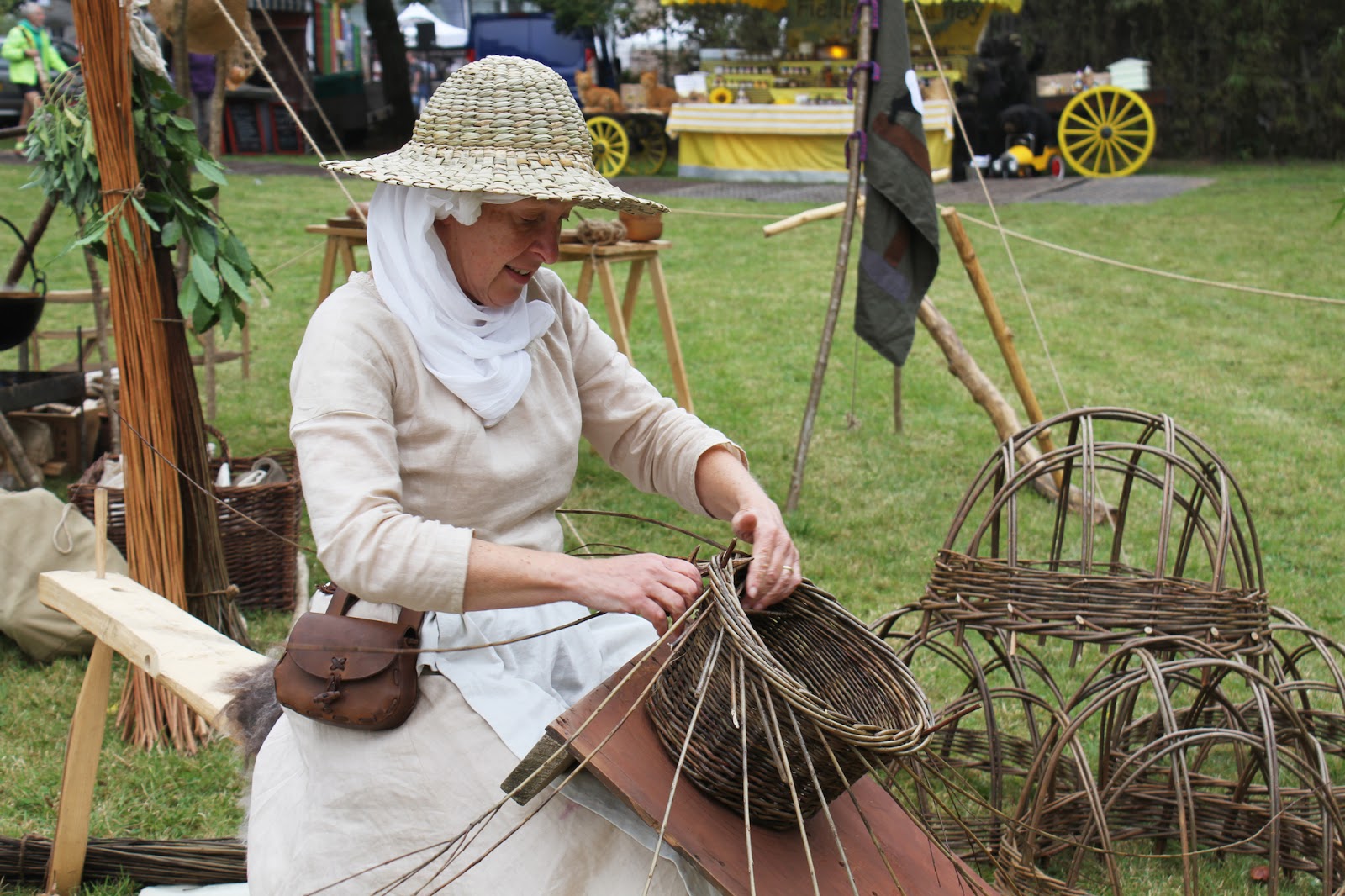
In May we had our first event of the year, Holker Garden Show. We attended in 2014 along side English Heritage and Furness Abbey Fellowship and this year English Heritage asked us to return with them to put on a small display. We were there for two days, the first had Bertram, Brother Orme Tethera and new member Matilda, the basket maker, display to the public. We had may interested passers by and we promoted our brand new up coming event.


June 2015

Life in the Past | Day 1 | 06.06.2015

The 6th of May saw the start of a brand new event created by Iron Shepherds, Life in the Past.

Life in the Past had been planned and worked on throughout the winter and was set to be a two day event showcasing life in the past at and around Furness Abbey. Day one was meet the 12th century peasants to find out what life was like living in Furness and what it was like farming the land on a daily basis to produce food not only for yourself but for the Abbey.

We had two new specially written displays on the day: a farming talk written by one of our members Karen (aka Heather), which showcased farming in the 12th century and how tough yet vital it was, and a mummers play written by Paul (aka Toadflax) which was a type of play common in the time to poke fun at establishments as well as to entertain. Both displays went down well and have become part of our growing repertoire. 


Life in the Past | Day 2 | 07.06.2015

The 7th was the second day of Life in the Past and this time we were 13th Century Monks for the day!

Following the success of last years Monks Life displays we wanted to include monks in our new event so our second day was dedicated to them and how they lived in Furness Abbey in the 13th Century. We had our small display area but also put on a Chapter Meeting, something that the monks had every morning, and two tours of the abbey with Brother Bertram (Stuart). The chapter meeting involved a reading of a chapter from the rules of St. Benedict followed by Brother Earnolf having to flagellate himself as penance for grumbling. People really seemed to like it!

The tours went really well also with many visitors sticking around to go on them. With glorious sunshine all day it really made the day, even if we did get a little warm in our woollen habits!

Take a look at the pictures bellow as well as the advert created to promote the event.


Family Fun Day at Gleaston | 27.06.15

At the end of June we returned to Gleaston for their second family fun day. We set up our camp at the edge of the field and demonstrated through the afternoon. It was a lovely event that we were pleased to have returned to. It was also a very warm summers day, one of but a few we had this summer!


August 2015

Muncaster Living History Week | 25-26.08.15

What a lovely if wet time we had at Muncaster this year. We were back for a third year of Living History week and it was a great one! We arrived on the Monday night before our two day stint to find a very wet, marshy field to set up in. Every other year we had attended the field was nice and dry but due to heavy rain this time the site was saturated. We looked around and set our tents up on the slightly higher, dryer land near where we usually set up. We wanted to stay dry when we slept! Eventually we had our camp, this time in a long line of tents, something we had tried before. It proved to work over the course of the two days but we do prefer our usual set up. We met many people over the two days as we demonstrated various crafts, performed our mummers play and weapons display. As always it was a wonderful event to be part of!


Medieval Fair at Furness Abbey | 05.09.15

Early in September we were back at Furness Abbey for another Medieval Fair, the third in fact! The sun was shining and people came out in their droves to enjoy a day in the ruins and enjoying the entertainment. We could be found inside our camp working on our crafts or in the display arena performing our weapons display. The day was wonderful and we all had a fantastic time chatting to the public and demonstrating. It's always a pleasure to be at Furness Abbey and the sunshine and interested visitors always helps! We even set up a camera to take a time-lapse throughout the day, this can be seen in the video player below. It certainly shows the amount of people who move through our camp during the day and the bright sunshine.


Magna Carta 800, Cartmel | 26+27.09.15

Another new event for us in 2015 was the Magna Carta 800 celebration at Cartmel. It was a two day event to celebrate the 800th year of Magna Carta and it featured ourselves alongside another re-enactment group, Tournee. We showcased daily life and crafts while the they performed large combat displays to the crowds. Together we filled the majority of the display field next to craft stalls and food tents. Over the weekend many thousands of people (possibly 10,000+) visited the village and came to wander our camp and chat to us. We often had large crowds of people around us watching as we demonstrated which put the pressure on but also really made the day special. It was a truly fantastic event and something we are very proud to have been a part of! If this event were to happen again we would be there at the drop of a hat!


Apple Day, Ulverston | 03.10.15

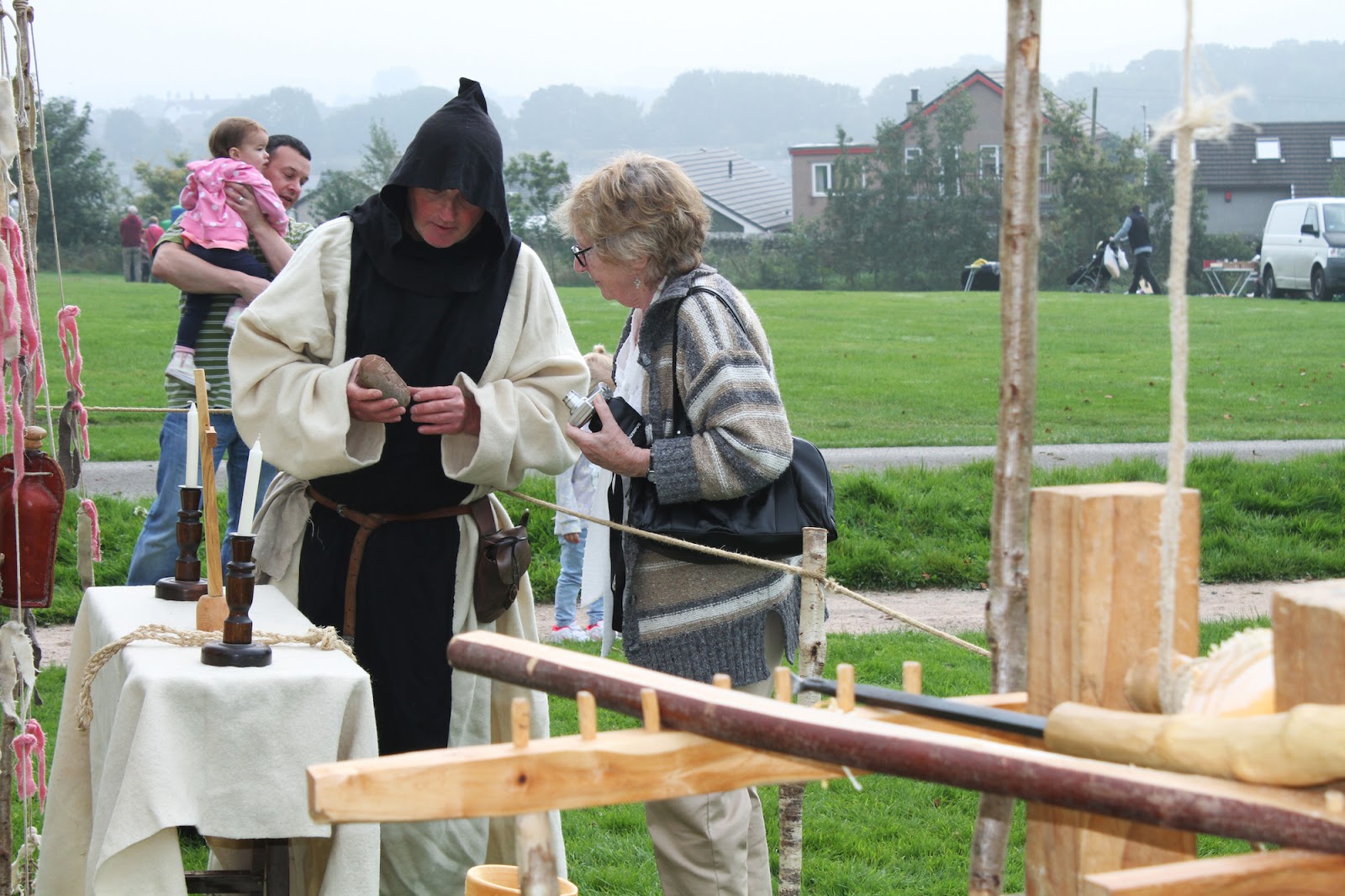
Our first ever October event took place at Ford Park in Ulverston where we were part of Apple Day. We had a small camp set up in part of the  field where we spoke to the public about life in 12th Century Furness. Most of us were peasants but we did have one monk attend to give the religious aspect of the time. There was thick mist throughout the day which gave a certain atmosphere to proceedings and it did make it a little chilly. It was a lovely event and we met many interested people.


Magna Carta Medieval Fayre, Witherslack | 04.10.15

Another October event! This one the day after Apple Day. We were asked to attend a Medieval Fayre in Witherslack to celebrate the Magna Carta. We jumped at the chance and took out kit over for the Sunday event. This event saw us try out another layout for our camp, this time we pitched up in a sort of diamond shape in the centre of the field. This meant people could walk around us with someone always visible to talk to or watch. It worked well. We had a very pleasant and fun day here speaking to various folk about what we do, We even performed our weapons display twice. Something we hadn't done for two events now. It was the perfect event to finish our season off with and we thoroughly enjoyed every minute of it.


2015 has been a fantastic year for Iron Shepherds, we feel like we are going from strength to strength and are very excited to see what the future holds! We have many ideas for the coming year and hope we can share these with you in the near future, roll on 2016 lets see what you bring us!

If you would like to keep up to date with what the Iron Shepherds are doing then why not follow us on Facebook or Twitter You can also check out our website to discover what we do and what we have coming up.